Working and thinking together in CUTIE (UCPH)
One of the benefits of collaborating in a transnational project is the wonderful chance to
work together on coming up with new solutions to shared problems, even when those
solutions may look nothing alike in their local implementations.
In the CUTIE project we have taken an institutional approach to developing teachers’
digital competencies, trying to get institutions to take on more of the responsibility for
digital competencies development happening and lifting the burden off the shoulders of
individual teachers. This is a shared structural problem across universities.
Generative AI in education also poses shared questions and challenges: How should
Higher Education Institutions approach, regulate, and not least help students and teachers
navigate teaching and learning in a world with GenAI? There are no easy solutions, so it is
a great joy to have other institutions to discuss and develop ideas and solutions with.
Based on joint discussions, knowledge sharing and knowledge exchange we have
discussed these challenges, developed solutions, given each other feedback and gotten
useful input, while still developing something that is relevant, useful and meaningful in our
own local context at the University of Copenhagen.
Joint development, local implementations
Some of the things we have developed at UCPH is courses for teachers on AI for teaching
and learning and we have conducted a survey across 2 faculties (HUM and THEO) in
spring 2024 on Students Use of and Perspectives on Generative AI (report in Danish here)
– getting insights into how our own students are using GenAI and what their perspectives
are on studying with or without Generative AI. While we might have done some of this
work without the CUTIE project, the project allowed us to prioritize this work, and the
feedback we have gotten from our partners in the development phase has been invaluable
in our process. We have shared the results with our partners, and some of them have
been inspired to subsequently conduct their own surveys. Similarly we have been inspired
by other activities and formats used in our partner institutions, thus benefitting all involved
and adding perspectives we might otherwise not have thought to include.
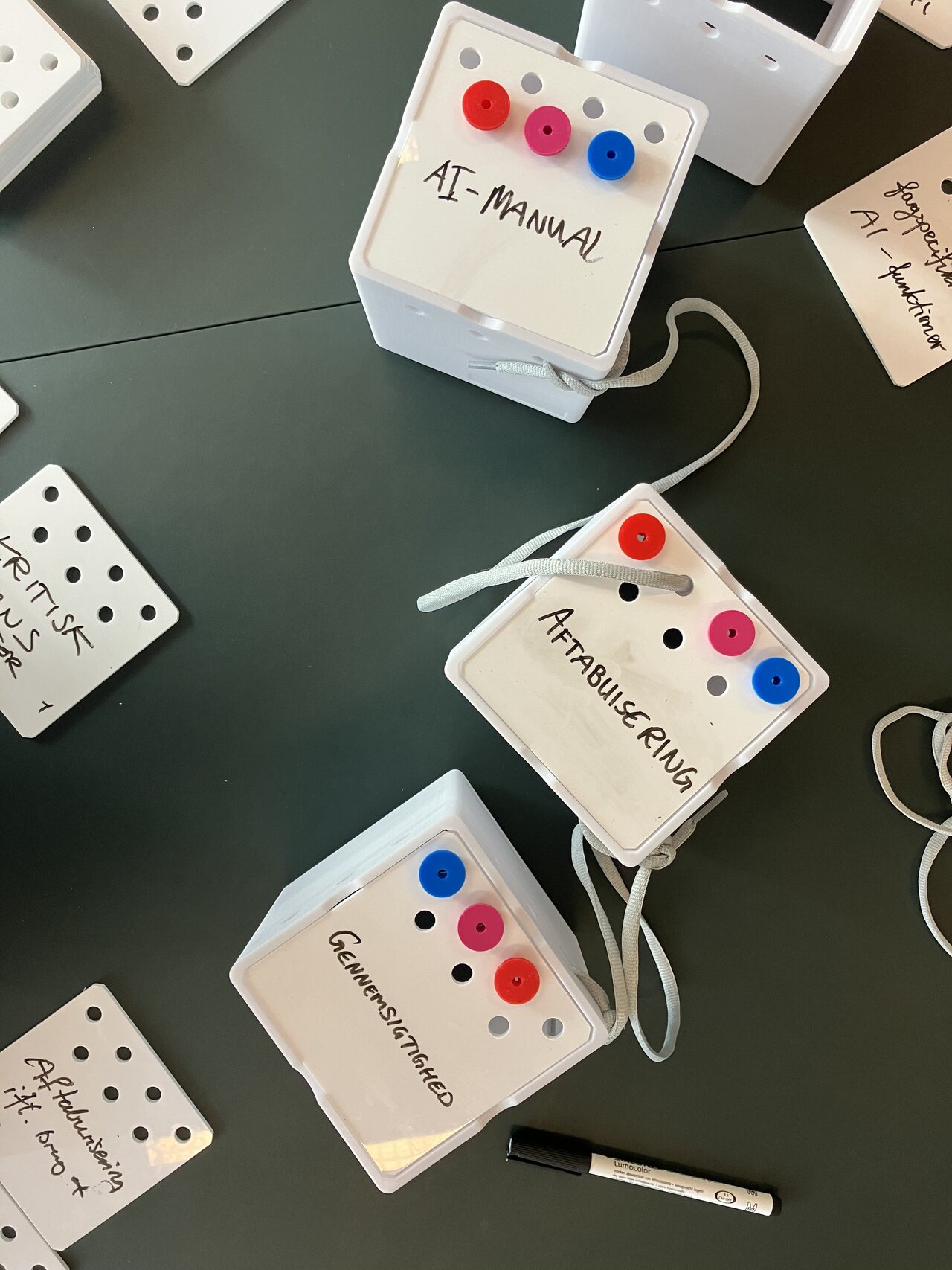
Another great example was our co-creation with students, which was also a highly
collaborative process, where the desk research and literature review was conducted
across institutions and results discussed and analysed together, while the solutions
implemented were varied and highly adapted to the local contexts. So while the activities
carried out in the different institutions were different – as those institutions are different in
many ways – the collaborations in the project have been fruitful and have always
contributed with a diverse range of perspectives and experience from different contexts,
making the results even better. Locally it has been a joy to recruit students and run an
open, explorative process into their perspectives on GenAI for learning, trying to tease out
their perspectives and see what they saw as most needed: De-tabooing AI, and what
solutions they proposed to this problem. The products produced have since informed our
local practice for digital competencies development and inspired similar units nationally,
when the results have been presented at various conferences. Find more details about the
UCPH Co-creation case in the CUTIE Catalogue, and the UCPH student produced
materials here.
There have been many more great examples and materials created – not least the course
for educational leaders Digital Leadership in Higher Education – but we’ll stop here and
just thank our CUTIE partners, UCPH teachers, students, managers and colleagues for
participating, co-developing and enriching our work. And for anyone considering a
transnational project – we can only encourage it!